A Parent's Guide to Reading Ingredient Lists
You're standing in the snack aisle, squinting at the back of a brightly coloured package. The front screams 'wholesome,' 'natural,' and 'made with real fruit.' But the ingredient list? It reads like a chemistry exam.
You're not alone. Most parents feel exactly the same way — and that confusion is no accident.
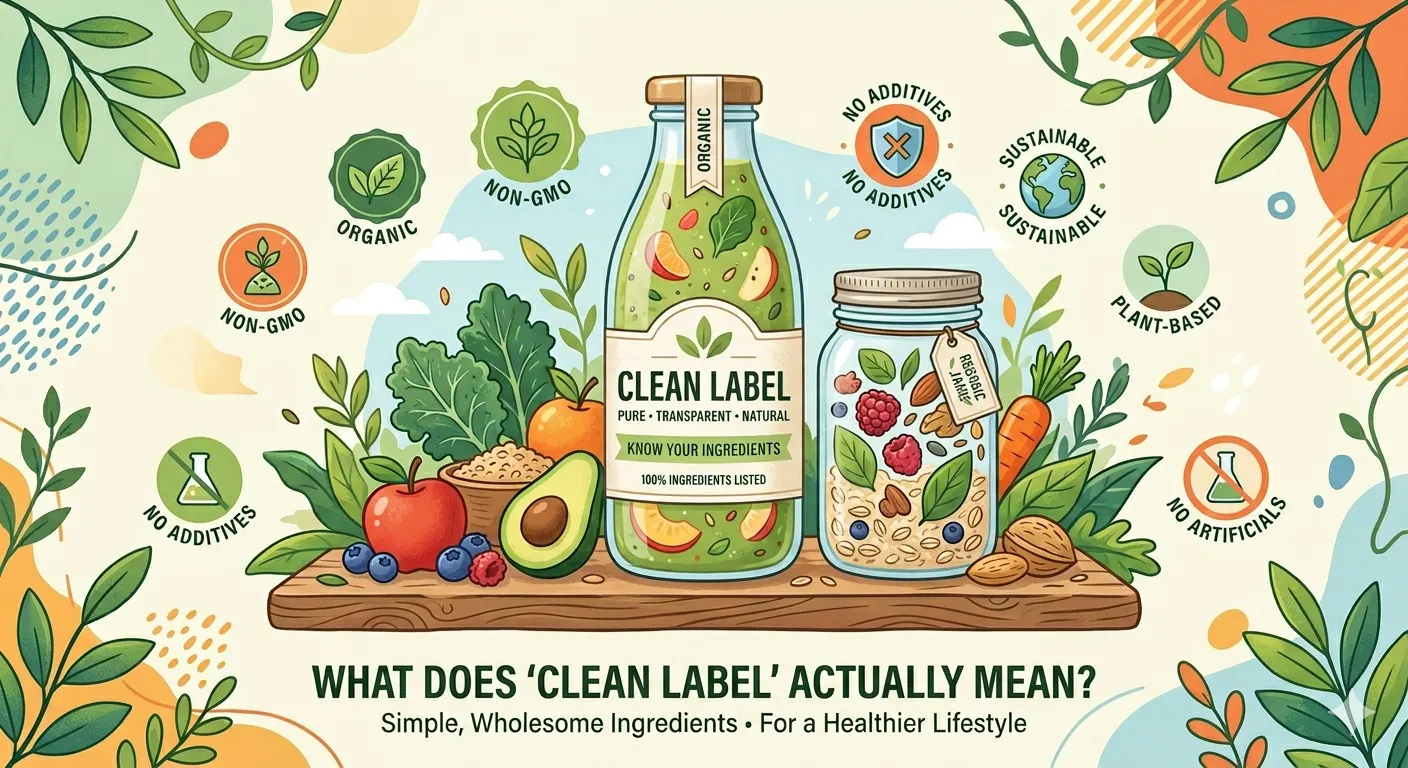
The term 'clean label' has become one of the most talked-about phrases in the food industry. But what does it actually mean? Is it a regulated standard? A marketing gimmick? And how do you use it to make smarter choices for your kids?
Let's break it all down — simply, honestly, and practically.
Key Takeaways
- "Clean label" has no legal definition — it's a promise of transparency, not a regulated standard, so you still have to read the pack.
- The ingredient list is your most powerful tool: check the order, count the ingredients, and hunt for sugar's many aliases.
- Front-of-pack words like "natural" and "wholesome" mean nothing nutritionally; only a few claims (like "high in fibre" and "source of protein") are actually regulated.
- A truly good snack goes beyond clean — it delivers real protein and fibre to actively fuel your child.
First Things First: 'Clean Label' Has No Legal Definition
Here's something the food industry rarely advertises: the term 'clean label' is not regulated by any government authority. There is no official checklist, no certifying body, and no law that prevents a brand from slapping those words on a package filled with artificial additives.
What "clean label" has come to mean in practice is a product that:
- Uses a short, recognisable ingredient list
- Avoids artificial colours, flavours, and preservatives
- Contains no synthetic additives or chemical-sounding names
- Is transparent about what's inside and why
💡 The rule of thumb: if you couldn't find every ingredient in a typical kitchen or grocery store, it probably doesn't belong in your child's snack.
How to Actually Read an Ingredient List
The ingredient list is the most powerful tool a parent has — and it's almost always ignored in favour of the flashy front panel. Here's how to use it:
1. Look at the Order
Ingredients are listed by weight, from most to least. The first three or four ingredients make up the bulk of the product. If sugar, glucose syrup, or a refined starch appears in the top three of a children's snack — put it back.
2. Count the Ingredients
Clean snacks tend to have fewer ingredients. A good benchmark for children's snacks is under 10 ingredients. The shorter the list, the less room there is for fillers, binders, and artificial extras.
3. Watch Out for Sugar's Many Disguises
Sugar is notorious for appearing under different names to stay lower on the ingredient list. Here are the most common ones to watch for:
- Glucose syrup / glucose-fructose syrup
- Dextrose, maltose, sucrose
- Fruit juice concentrate (often as sugary as table sugar)
- Corn syrup, high-fructose corn syrup
- Invert sugar, treacle, molasses
- Maltodextrin (also a fast-digesting starch)
⚠️ A product with three different types of sugar listed separately may technically show each one lower on the list — but combined, sugar could be the dominant ingredient.
4. Spot the Artificial Additives
If you see any of the following, it's a sign the product is leaning heavily on artificial support rather than real nutrition:
- Artificial colours: E102 (tartrazine), E110, E122, E129 — linked to hyperactivity in some children
- Artificial flavours: listed simply as "flavourings" or "artificial flavouring"
- Preservatives: sodium benzoate (E211), BHA, BHT
- Emulsifiers and stabilisers: while some are natural (sunflower lecithin), others are synthetic
What Should Actually Be on a Clean Label?
A genuinely clean snack for children should be built from real, recognisable ingredients that also deliver nutritional value. Here's what we love to see:
- Whole grains or legume flours (oats, chickpea, lentil)
- Real dried fruit — not fruit juice concentrate or puree as a sugar substitute
- Nuts and seeds — for protein, healthy fats, and fibre
- Natural flavour sources — vanilla extract, cinnamon, cocoa powder
- No added sugar, or minimal unrefined sweeteners like honey or dates
The Protein & Fibre Test
Beyond just checking for nasties, a genuinely good children's snack should be doing something nutritionally useful. Two of the most important things to look for are protein and fibre.
Protein keeps kids full, supports muscle growth, and stabilises blood sugar — meaning fewer energy crashes and fewer demands for another snack 20 minutes later. Look for at least 3–5g of protein per serving in a children's snack.
Fibre supports gut health, healthy digestion, and steady energy. The recommended daily fibre intake for children aged 5–11 is around 20g per day. Most children fall well short of this. A snack contributing 2–4g of fibre per serving is making a meaningful contribution.
📌 A clean label snack that also delivers on protein and fibre isn't just avoiding the bad stuff — it's actively doing good.
Front-of-Pack Claims: What to Trust and What to Question
Food packaging is designed to sell first and inform second. Here are some of the most common front-of-pack claims, and what they actually mean:
| Claim | What It Actually Means |
|---|---|
| "Natural" | No legal definition in most countries. Can still contain processed ingredients. |
| "No added sugar" | May still contain naturally occurring sugars or sweeteners — always check the label. |
| "Made with real fruit" | The amount of fruit can be tiny. Check where it appears in the ingredient list. |
| "Wholesome" / "Nourishing" | Pure marketing. Means nothing nutritionally. |
| "High in fibre" | Regulated — means at least 6g of fibre per 100g. This one you can trust. |
| "Source of protein" | Regulated — means at least 5% of energy from protein. A real claim. |
Your 60-Second Snack Label Checklist
Next time you pick up a children's snack, run through this quick checklist:
- Are there fewer than 10 ingredients?
- Can I recognise and pronounce every single ingredient?
- Is sugar (or one of its aliases) absent from the first three ingredients?
- Does it contain at least 3g of protein per serving?
- Does it contribute at least 2g of fibre per serving?
- Are there no artificial colours, flavours, or preservatives?
✅ If you can answer yes to all six — you've found a genuinely clean snack.
Frequently Asked Questions
Is a longer ingredient list always a bad sign? Not always — but for children's snacks it usually is. A long list often means fillers, binders, and artificial extras are padding out a small amount of real food. As a benchmark, under 10 recognisable ingredients is a good target.
Does "no preservatives" mean the snack is healthy? No. A snack can be free of preservatives and still be built on refined flour and sugar. "Clean" is about what's absent; "nutritious" is about what's present. Check that the snack also delivers something useful, like protein and fibre.
Are natural sweeteners like honey and dates automatically fine? They're a better choice than refined sugar because they're less processed and bring trace nutrients, but they're still sugar and belong in moderation. Watch where they sit in the ingredient order, and be cautious with quantities — see our guide on sweeteners for toddlers.
How is "clean label" different from "whole grain"? "Clean label" describes the whole ingredient philosophy — short, recognisable, additive-free. "Whole grain" is one specific quality you want to see inside it. A snack built on whole grains rather than refined flour is a strong sign the brand is serious about nutrition, not just clean marketing.
Should I trust a "made with real fruit" claim? Be cautious. The amount of fruit can be tiny, and it's sometimes added as juice concentrate — essentially sugar. Flip the pack over and see where fruit actually appears in the ingredient list before you trust the front panel.
The Bottom Line
"Clean label" is a starting point, not a finish line. It means a brand is committed to transparency — choosing real, recognisable ingredients over cheap additives and fillers. But the best children's snacks go further: they're not just clean, they're nutritionally purposeful.
The next time you're in the snack aisle, flip the packet over. Ignore the marketing. Read the ingredients. And look for something that's genuinely built to fuel your child — not just to sell to you.
Because your child deserves both.
Want to know more? Read our next post: How Much Protein Do Kids Actually Need?
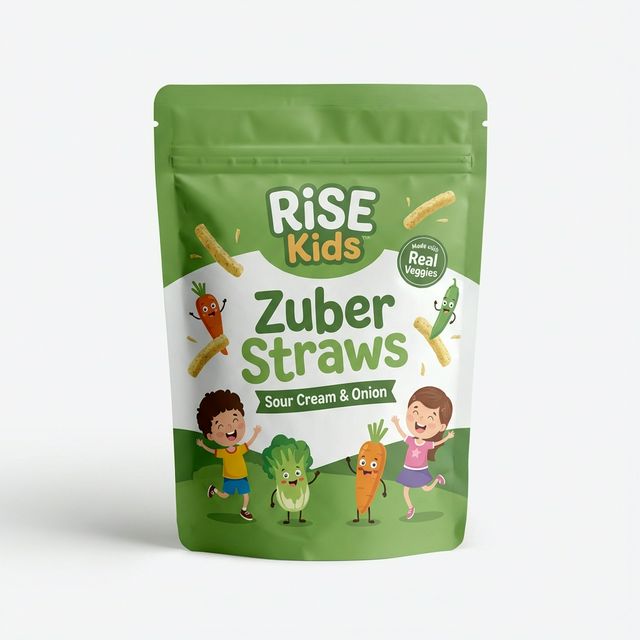
A label you can actually trust.
Short ingredient list, nothing artificial — read our pack and see the difference for yourself.
Part of
Reading Food LabelsStart here
The 5-Second Label Test: How to Spot 'Junk' in Disguise
Maltodextrin? Liquid Glucose? Learn to decode the secret language of food labels in 5 seconds flat.
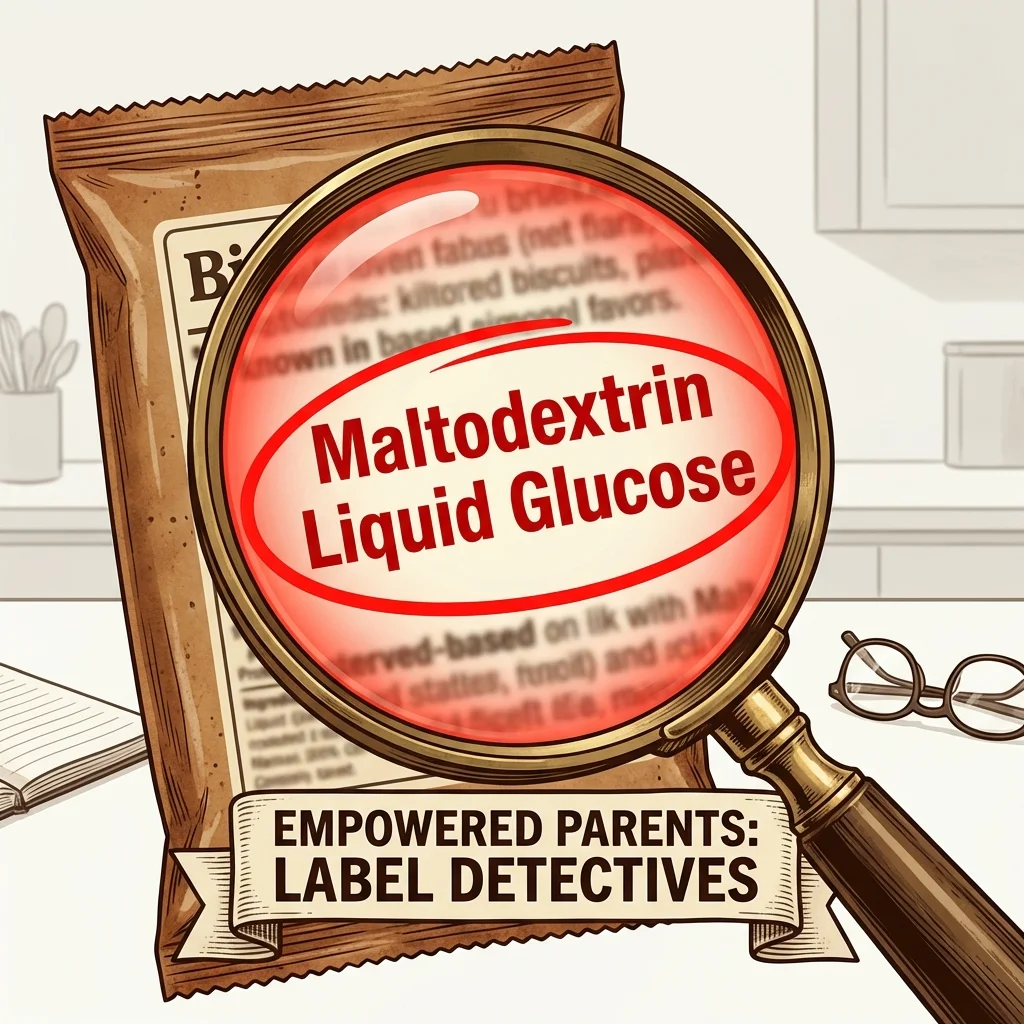
The 5-Second Label Test: How to Spot 'Junk' in Disguise
Maltodextrin? Liquid Glucose? Learn to decode the secret language of food labels in 5 seconds flat.
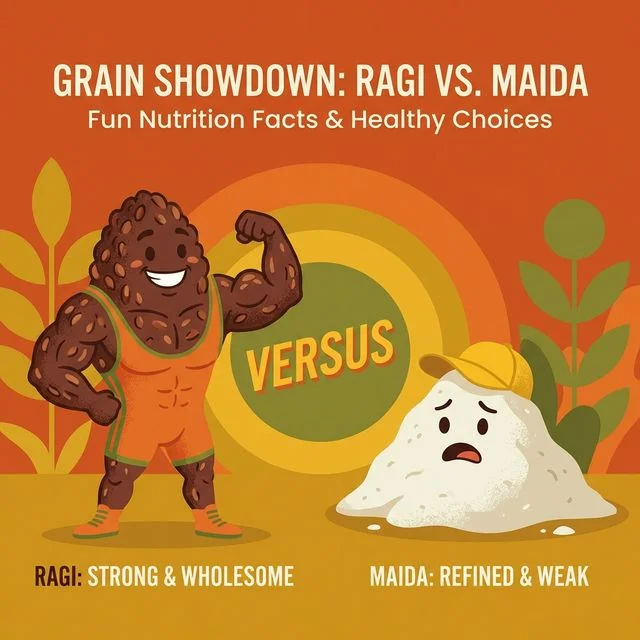
Millet Puffs vs Potato Chips: The Healthier Crunch for Kids
Millet puffs or potato chips? We compare them on calories, fat, fibre, and hidden nasties like palm oil and maida — so you can satisfy your child's crunch craving the healthy way.
Share this knowledge
Help other parents raise healthy champions!